

Guest article supplied by Katie Jenkin, Founder of The Stone & Tile Company, a UK-based tile retailer specialising in porcelain and natural stone tiles for kitchens, bathrooms and living spaces.
As specialists in porcelain and natural stone tiles, we’re often asked which flooring is best for orangeries. Below, we explore practical, design-led flooring ideas that suit how these spaces are really used, while keeping the focus firmly on longevity, comfort and timeless style rather than short-term trends.
Key Takeaways
- Orangeries are permanent, year-round living spaces, so any flooring must be durable and stable.
- Flooring often needs to flow seamlessly between kitchens, dining and seating areas.
- Porcelain floor tiles perform exceptionally well due to their resistance to temperature fluctuations and high wear ratings.
- Natural stone flooring tiles offer timeless character and excellent thermal performance.
- Larger format tiles enhance continuity and help open up light-filled spaces.
- Indoor–outdoor flooring should always consider slip resistance for external areas.
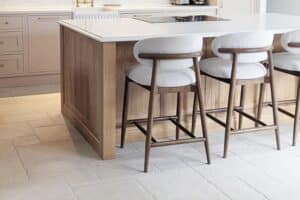
Why flooring matters in orangeries
Orangeries, with their solid roofs and roof lanterns, tend to feel more like permanent extensions of the home than traditional conservatories. They are commonly used to create open-plan kitchen living areas, and are often designed as separate rooms for dining, relaxing or entertaining.
As a result, flooring choices need to work harder than they might in a standard extension.
An orangery floor often needs to:
- Transition seamlessly from an existing kitchen or living area.
- Withstand temperature changes throughout the day and across seasons.
- Perform efficiently with underfloor heating.
- Handle high footfall, pets and garden access.
- Support heavy furniture and kitchen appliances.
Kitchen orangeries: practical flooring with design impact
Flooring in kitchen orangeries must cope with spills, heat, heavy appliances and constant movement, while still feeling cohesive with the rest of the home. This is why porcelain and natural stone tiles remain such popular choices.
Porcelain floor tiles are manufactured at extremely high temperatures, making them far denser and less porous than many alternative flooring materials. This density allows porcelain to perform reliably in environments where temperatures fluctuate throughout the day. Unlike natural wood or laminate, porcelain will not expand, warp or shrink when exposed to direct sunlight or changes between warm interiors and cooler external conditions.
This stability makes porcelain tiles ideal for orangeries that are used year-round, particularly those with underfloor heating. Porcelain conducts heat efficiently and evenly, helping spaces warm up quickly and retain heat for longer, while maintaining its structure and appearance over time.
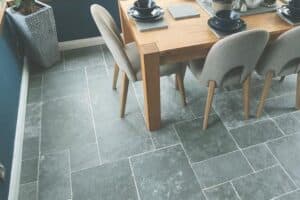
Stone-effect porcelain tiles in limestone and travertine styles are especially popular, as they blend effortlessly with a wide range of interiors and are easy to maintain. Concrete-effect tiles with subtle matt finishes are also increasingly chosen, softening modern kitchens while keeping spaces light and calm.
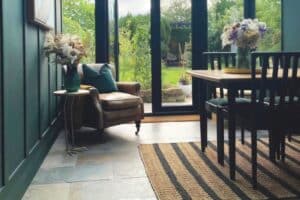
Natural stone in light-filled extensions
Natural stone tiles have long been associated with orangeries and glazed extensions. Where architecture is designed to blur the line between indoors and out, natural stone brings an authenticity and visual depth that feels entirely at home.
Materials such as slate, limestone and travertine naturally complement timber doors, painted frames and garden-facing glazing. Their subtle variation in tone, texture and fossil detail creates a softer, more organic feel than uniform materials, helping the space feel grounded rather than overly polished.
When paired with underfloor heating, natural stone performs exceptionally well as it conducts heat efficiently and retains warmth, creating a consistent, comfortable floor surface. With correct sealing and care, stone floors are highly durable and age gracefully over time.
Open-plan living: keeping continuity without monotony
Many homeowners choose to knock through walls so their orangery becomes part of a larger open-plan layout. In these spaces, flooring continuity is often key, but that doesn’t mean every area needs to feel identical.
Using the same tile throughout helps unify kitchen, dining and seating zones. Subtle layout changes can then introduce interest, such as altering tile orientation beneath a dining table or defining a seating area through pattern rather than material.
The key is consistency in tone and finish. Introducing too many contrasting materials can disrupt flow and make the extension feel visually disconnected.
Larger format tiles work particularly well here, reducing grout lines and allowing the flooring to flow naturally between spaces.
Underfloor heating and comfort underfoot
Underfloor heating has transformed how orangeries are used. With warmth distributed evenly across the floor, tiles no longer feel cold and become one of the most efficient flooring options available.
Both porcelain and natural stone tiles conduct heat exceptionally well, helping spaces warm evenly and retain heat for longer. This makes them ideal for orangeries designed as everyday living spaces rather than occasional rooms.
Matt finishes are particularly popular, not only for their contemporary appearance but also because they reduce glare from roof lanterns and large glazed areas.
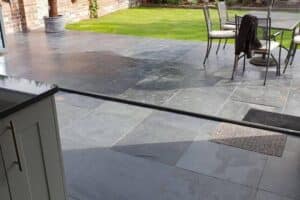
Inside–outside flow: what to consider
Creating a near-flush transition from orangery to patio is increasingly popular, particularly where bi-fold or sliding doors open fully onto the garden. Flooring plays a key role in achieving this seamless connection.
Many porcelain tiles are available in both indoor and outdoor versions, allowing homeowners to mirror the design while using a slip-rated surface externally. Some natural stone tiles can also be used both inside and out, creating a cohesive look that visually extends the space beyond the glazing. As with any external flooring, finish and slip resistance should always be carefully considered.
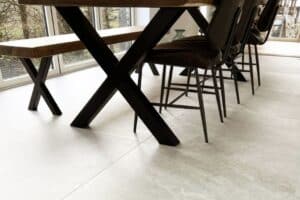
Pets, paw prints and everyday life
Orangeries often become the main route to the garden, especially in households with pets. Muddy paws, wet shoes and garden debris are part of daily life.
Tiles are a practical solution in these environments. They’re easy to clean, resistant to scratches and far more forgiving than timber or laminate. Mid-tone finishes tend to hide marks better than very light or very dark tiles.
Final thoughts
Whether your orangery is a kitchen hub, a quiet seating area or part of a larger open-plan layout, flooring underpins how the space looks, feels and performs. Choosing materials that balance durability, comfort and timeless design will ensure your glazed extension works beautifully for years to come.
When designing a bespoke glazed extension, thoughtful consideration should go into your chosen flooring – with huge thanks to Katie Jenkin for your expert insights into stone and tile flooring solutions. With over 20 years of industry experience, The Stone & Tile Company help homeowners and designers choose practical, design-led flooring solutions that suit real homes, with collections curated for durability, style and long-term value.