
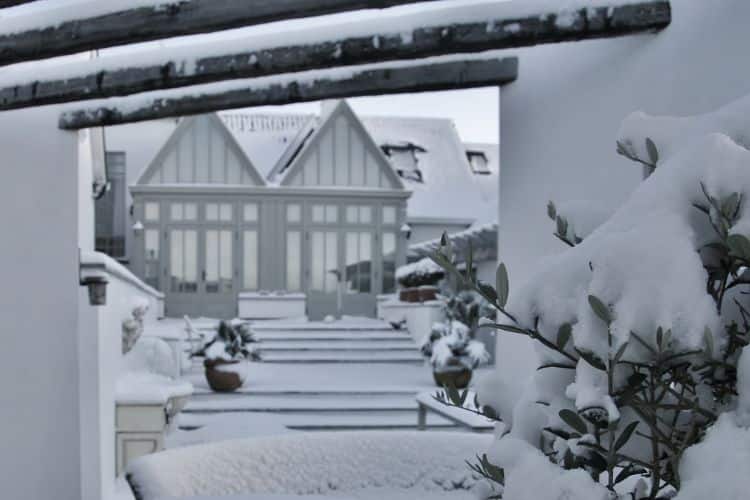
Owners of timber and glazed extensions, such as conservatories and orangeries, are being urged to act now to protect their investment, as despite an unseasonably warm December so far, a sudden freeze could be days away.
These beautiful structures can be particularly exposed, often extending out beyond the main home, and once snow or ice strikes, damage can occur quickly if preparation tasks have not been undertaken.
Mervyn Montgomery, joint director of Hampton, said: “Natural wood brings a warmth and beauty that makes it impossible to replicate – its rich grain, texture and character add instant charm to any space. But wood’s appeal comes from the fact that it was once a living material, and it continues to behave like one. It naturally absorbs and releases moisture, causing it to expand, contract and subtly shift with changing temperatures and humidity. This movement is completely normal, but it does mean that wooden features need a little understanding and care to keep them performing at their best – especially during our unpredictable winters.”
Hampton offers the following advice to prepare a hardwood glass building for the winter season ahead:
Remove debris: Through the summer it’s easy to overlook gutters, hoppers and downpipes, but once leaves start falling, blockages can build fast. Remove any debris, small toys, balls or obstructions to keep rainwater moving away from the property. If a blockage remains when the temperature dips below freezing, trapped water can expand and lead to costly damage.
Inspect drains: Likewise, inspect nearby drains for any blockages and consider fitting drain covers to prevent future build-up. Even robust timber, protected with the most advanced exterior coatings, has its limits when exposed to standing water.
Reduce or remove climbing plants: Hardy climbers can keep growing through a mild winter, so a pre-emptive autumn prune is often the smartest move. Those small shoots and the sticky tendrils that cling to buildings can cause real problems if left unchecked, especially when they creep in behind gutters or into areas that aren’t regularly inspected.
Clean vents and sensors: Many orangeries and conservatories feature electric, thermostatically controlled roof vents with rain sensors, designed to release excess heat while protecting the space below. To keep them working at their best, they need a little care. Make sure they’re free from grime, leaves and cobwebs so they can respond instantly and close at the first sign of rain or snow.
Gently wipe down woodwork: Any orangery or conservatory will benefit from a little routine care, including washing down the paintwork with a mild detergent and touching up the small cracks that naturally develop over time. What you should never do, however, is reach for a pressure washer; it may seem quicker, but the force of the water can cause serious damage to the structure.
Mervyn Montgomery said: “As is often the case, prevention is better than the cure and so it makes sense to spend a little time prepping a conservatory or orangery for everything that the British weather may throw at it this year.”
-ends-
Notes to editors:
For more information, contact:
Ali Cort / Rosey Bowring
Browser Media
0207 099 0945
ali.cort@browsermedia.co.uk / rosey.bowring@browsermedia.co.uk
Portrush-based Hampton Conservatories was founded in 1982 by Mervyn and Kim Montgomery and has since become a leading designer and manufacturer of bespoke hardwood glass buildings. It has developed unrivalled expertise in producing award-winning bespoke conservatories, orangeries, swimming pool enclosures, botanical glasshouses, garden rooms and glazed pavilions.